
You’re not doing it wrong.
The system is.
Calm ADHD Mornings
Without Yelling, Repeating Yourself, or Rushing Out the Door
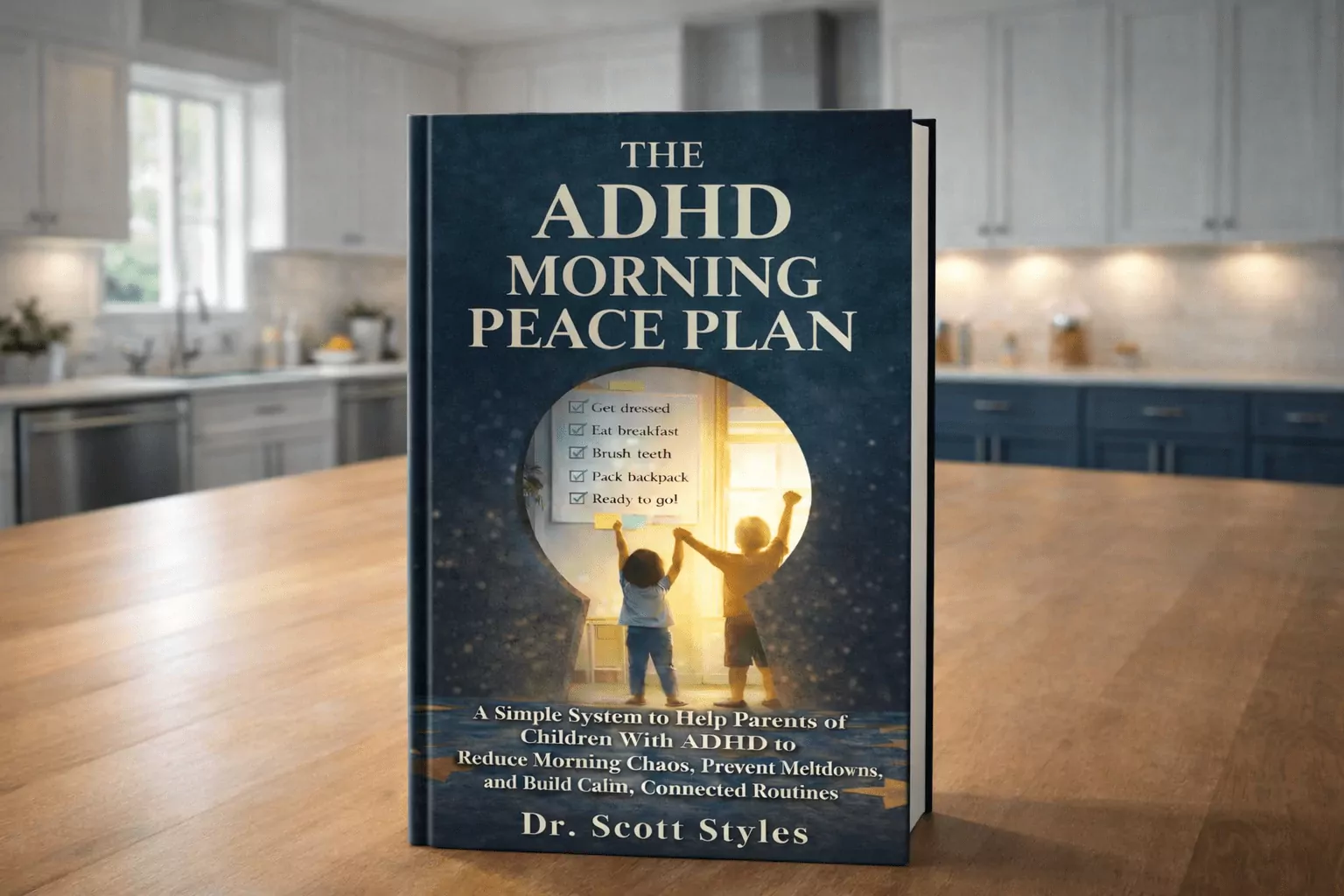
A Simple System to Help Parents of Children with ADHD Reduce Morning Chaos, Prevent Meltdowns, and Build Calm, Connected Routines
Works even if nothing else has stuck
Designed for real ADHD brains (not ideal mornings)
Start using it tomorrow
If your mornings feel like:
reminders ➡ resistance ➡ rushing ➡ frustration
You’re not doing anything wrong.
You’re trying to run a system that quietly depends on skills your child doesn’t consistently have access to yet.
That’s why it keeps falling apart.
Most morning advice assumes your child can:
- hold a plan in their head
- start tasks without prompting
- stay regulated under time pressure
If your child has ADHD, those demands are highest…
at the exact time those skills are lowest.
This isn’t a discipline problem.
👉 It’s a design problem.
This is for you if:
✅ Mornings feel chaotic, even when you’re trying your best
✅ You’re tired of repeating yourself
✅ You want structure without constant battles
This is NOT for you if:
❌ You’re looking for quick discipline tricks
❌ You expect your child to “just comply”
❌ You want perfection instead of progress
Inside The ADHD Morning Peace Plan
✔ The Calm Start System (step-by-step framework)
✔ No-Yell Morning Scripts (what to say under pressure)
✔ The Emergency Morning Reset (when everything goes off the rails)
✔ Visual supports that actually work (and why most fail)
✔ How to reduce reminders and increase follow-through
✔ How to support initiation and working memory
✔ How to stay regulated when mornings feel urgent
👉 This is not more advice.
It’s a system you can actually use.
The Calm Start System
(What You’ll Actually Do)
Step 1: Anchor the Morning
Start with one reliable action that “turns on” the routine
Step 2: Reduce Thinking Load
Replace verbal instructions with visual or predictable cues
Step 3: Support the Start
Make starting tasks easier than avoiding them
Step 4: Keep Things Moving
Use simple transitions that prevent stalls and meltdowns
Your Section Headline Goes Here

This is a paragraph.
Click here to edit this text and add your own content. It’s simple. You can easily make changes to the font and can move me anywhere on your page.
This is a great place to tell your story and let users know a little more about you and your services.
I'm Excited to Introduce You To:

Part X: Feature
The Calm Start System
A simple, repeatable way to build mornings that move forward—even when energy, focus, and emotions are low.
Here’s how it works:
1. Anchor the Morning
Start with one reliable action that “turns on” the routine
2. Reduce Thinking Load
Replace verbal instructions with simple, predictable cues
3. Support the Start
Make it easier to begin than to avoid
4. Keep Things Moving
Use transitions that prevent stalls and emotional escalation
Part X: Feature
This is where you'll paste in all the important details about this part of your product or service and the benefits that it provides to the person reading the sales page.
Part X: Feature
This is where you'll paste in all the important details about this part of your product or service and the benefits that it provides to the person reading the sales page.
Part X: Feature
This is where you'll paste in all the important details about this part of your product or service and the benefits that it provides to the person reading the sales page.
Part X: Feature
This is where you'll paste in all the important details about this part of your product or service and the benefits that it provides to the person reading the sales page.

Who is This For?
This is a paragraph.
Click here to edit this text and add your own content. It’s simple. You can easily make changes to the font and can move me anywhere on your page.
This is a great place to tell your story and let users know a little more about you and your services.
What other people are saying:
This is where you would insert testimonials.
This is where you would insert testimonials.
This is where you would insert testimonials.
This is where you would insert testimonials.
This is where you would insert testimonials.
This is where you would insert testimonials.
This is where you would insert testimonials.
This is where you would insert testimonials.
This is where you would insert testimonials.
This is where you would insert testimonials.
This is where you would insert testimonials.
This is where you would insert testimonials.
This is where you would insert testimonials.
Try It Risk-Free for 30 Days
If this doesn’t help your mornings feel more manageable,
you can request a full refund.
No questions. No pressure.
Frequently Asked Questions:
Is this book about creating perfect mornings?
No. The goal is peaceful enough mornings—manageable, calmer, and less chaotic.
Is this a routine or a schedule?
No. The system is built around flexible morning flow rather than rigid schedules, which are often unrealistic for ADHD brains first thing in the day.
Is this therapy or a clinical treatment?
No. This is a practical, parent-led system designed to support daily life. It does not replace therapy or medical care.
What age is this book best for?
The strategies are most applicable for elementary through middle school children, but many parents find the principles helpful beyond those ages.
What if my child resists routines or structure?
This book addresses that directly by focusing on choice-based structure, environmental cues, and reducing pressure—rather than forcing compliance.
I’ve tried charts and visuals before. Why would this be different?
Most visuals fail because they overload memory or fade into background noise. This book shows how to design visuals that actually support initiation and sequencing.
What if mornings are already completely chaotic?
That’s exactly why the Emergency Morning Reset exists. The system includes a way to contain hard mornings so they don’t spiral or damage connection.
Will this make my child dependent on me?
No. The book explains how independence grows gradually through shared responsibility and fading support, not pressure.
How quickly will I see changes?
Many families notice emotional shifts quickly, especially reduced tension and fewer power struggles. Long-term change builds with consistency, not perfection.
Your Name
Your Title
P.S. You Don’t Need a Better Morning Routine, you need a system that works even when mornings are hard.
P.P.S. 👉 Get The ADHD Morning Peace Plan Now and start using it tomorrow.
©2025 YOUR BUSINESS